Single Documentation

Articles and Videos

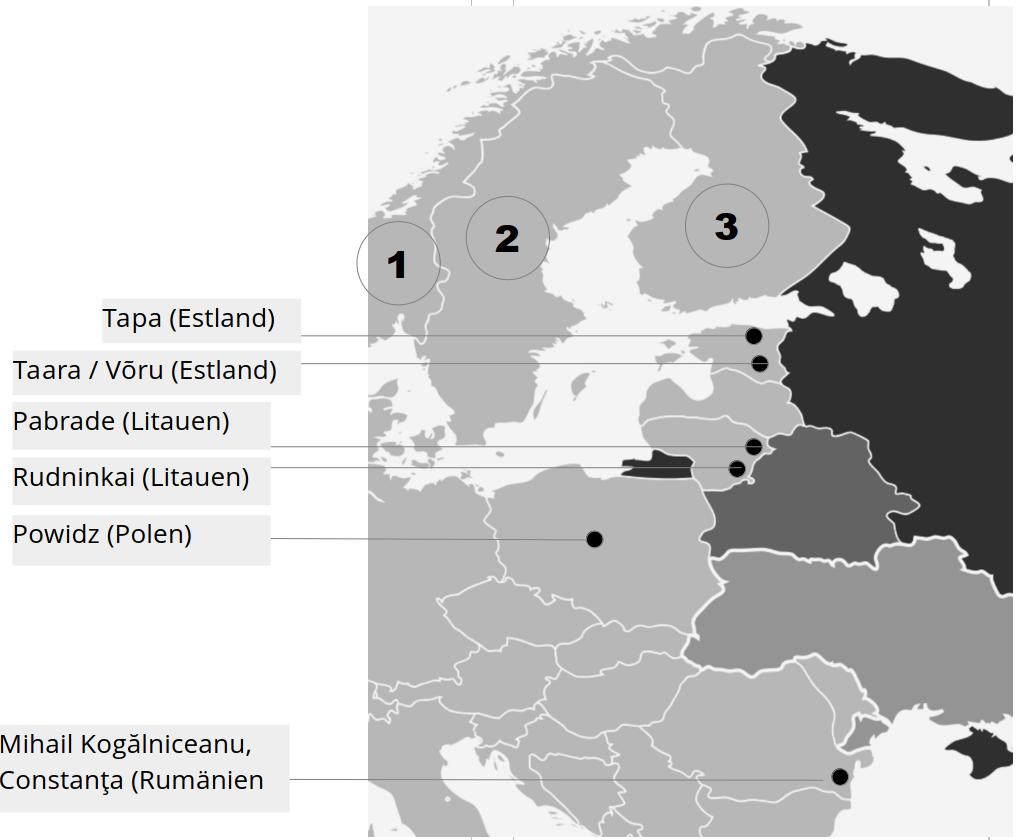
  • Neue NATO-Militärbasen in Nord- und Osteuropa

    Grafik: FriedensJournal Nr. 6/2024 –> Druckfassung

    1997 wurde im Nato-Russland Founding Act vereinbart, dass keine ständige Stationierung von Nato-Truppen in Osteuropa erfolgen soll. Seit der Krise um die Ukraine und die Angliederung der Krim an Russland 2014 wurde dieses Prinzip schrittweise ausgehebelt. In den darauf folgenden Jahren wurde zwar offiziell auf eine ständige Stationierung in Osteuropa verzichtet, aber immer häufiger erfolgten Militärmanöver mit periodisch nach zumeist sechs Monaten rotierenden Militärkontingenten.

    Seit 2019 werden aber eigene US-Militärbasen in Osteuropa aufgebaut. Eine feste US-Präsenz ist derzeit bereits vor allem in Powidz (Polen) vorhanden.

    Viele Truppenübungsplätze

    Einige Truppenübungsplätze in Osteuropa sind seit 2015 fester Bestandteil von NATO-Manövern, insbesondere im Rahmen der jährlichen Defender-Übungen. Zu diesen fanden dazu entsprechende Truppenverlegungen statt. Zu nennen sind hierbei u.a. Rukla in Litauen, Drasko und Zagan in Polen sowie Cincu / Großschenk in Rumänien.

    NATO-Ausbaupläne bestehen vor allem in Montenegro (Sinjajevinans), was dort auf großen Widerstand in der Bevölkerung stößt.

    Die US-Militärpräsenz in Norwegen ist vor allem auch bezüglich deren zunehmenden Aktivitäten in der Arktis-Region zu sehen.

    US-Militärpräsenz in Nordeuropa

    Der größten Sprung in der flächenmäßigen Präsenz des U.S.-Militärs erfolgt derzeit in Nordeuropa durch den vertraglichen Zugang zu einer Vielzahl an Militärstandorten. Dem liegen folgende bilaterale Vereinbarungen aus der jüngsten Zeit zugrunde:

    (1) Norwegen: Supplementary Defense Cooperation Agreement für Zugang zu drei Luftstützpunkten und einer Marinestation (April 2021).

    (2) Schweden: Zugang zu 17 Militärbasen und Truppenübungsplätzen (Dezember 2023)

    (3) Finnland: Zugang zu mindestens 15 Militärbasen (Juli 2024)

    Logistik-Drehscheibe Polen

    Polen bietet einige Truppenübungsplätze und wird verstärkt zur logistischen Drehscheibe für US-Kriegsmaterial, was derzeit zu einem großem Ausbau des Logistikzentrum Powidz führt. Derzeit ist dieses noch der US-Army Garnison Rheinland-Pfalz bzw. dem Standort Mannheim unterstellt.

    NATO-Drohkulisse im Baltikum

    In Tapa (Estland) wurde bereits 2017 ein größerer Gebäudekomplex für ein NATO-Bataillon fertiggestellt, der größtenteils mit Soldaten aus Großbritannien belegt ist.

    Seit 2019 schickt die US-Armee bei den meisten ihrer neunmonatigen Einsätze Streitkräfte in Bataillons­stärke nach Litauen, um die Feuerkraft in der Nähe der stark militarisierten russischen Exklave Kaliningrad zu verstärken, die zwischen Litauen und seinem südlichen Nachbarn Polen eingezwängt ist. Der größte Teil des Regiments ist in Polen verankert, aber kleinere Einheiten sind entlang der Ostflanke der NATO verteilt. (Quelle: Stars & Stripes vom 5.1.2021)

    An dem zentralen Stützpunkt in Pabrade (Litauen) sind aktuell mehr als 10.000 US-Soldaten zeitweilig stationiert, dicht an der Grenze zu Belarus.

    Eine führende Rolle im Baltikum übernimmt derzeit auch Deutschland mit der derzeit im Aufbau befindlichen Militärbasis in Rudninkai (Litauen), der ersten eigenen Militärbasis im Ausland seit dem zweiten Weltkrieg. Die dort vorgesehene Panzerbrigade soll 2026 einsatzbereit sein. Im Vollbetrieb bis Ende 2027 sollen dort Unterkünfte für 5.000 Bewohner, d.h. Militärpersonal und Familien vorhanden sein.

    Strategische Militärbasis in Rumänien

    Der größte Ausbau erfolgt derzeit in Rumänien bei Constanta, wo die künftig größte US-Militärbasis in Europa überhaupt entstehen soll, d.h. größer als Ramstein. Die Anfang 2024 begonnenen Bauarbeiten sollen bis 2030 abgeschlossen werden und mehr als 10.000 Soldaten und Zivilisten aufnehmen, die teilweise aus Deutschland abgezogen werden sollen.


  • Ramstein und Kaiserslautern: zentrale Orte der Militarisierung und Kriegsführung

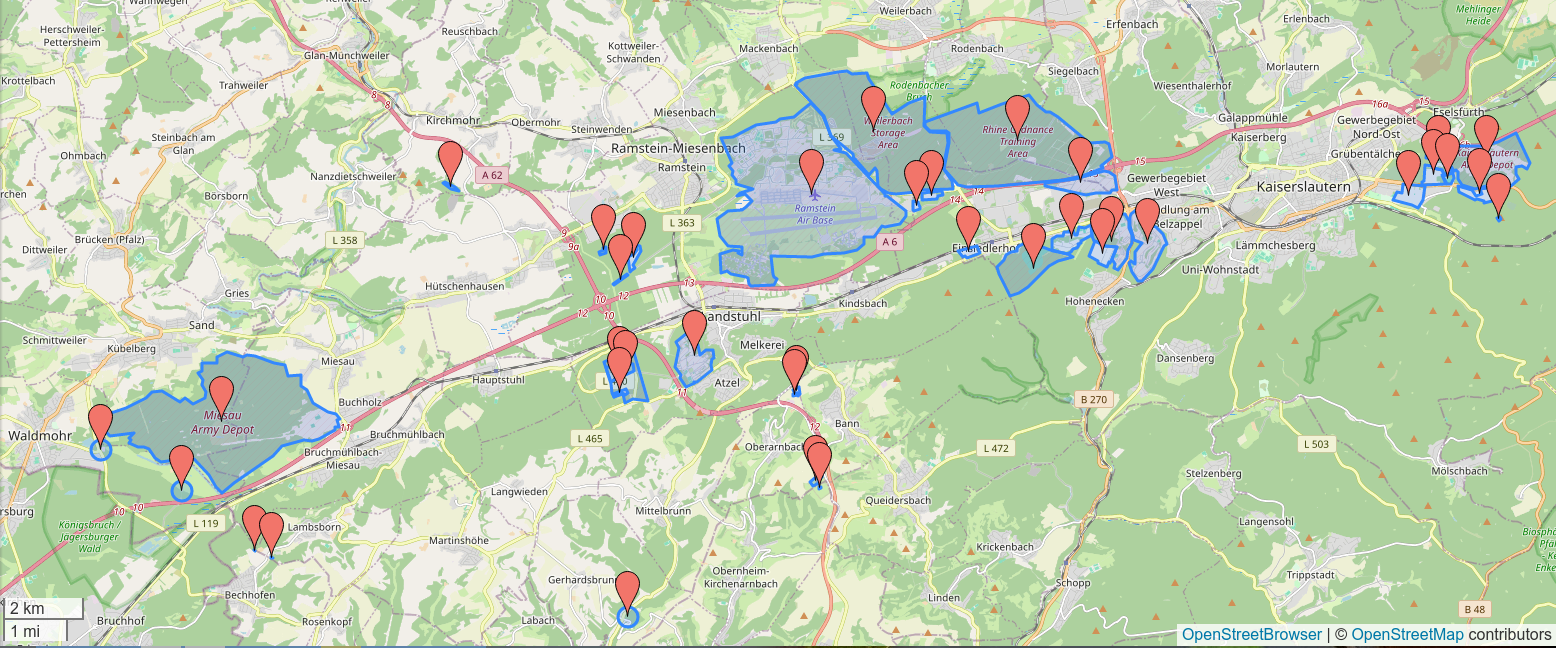
    Grafik: OpenStreetBrowser mit Military Layer

    von Karl-Heinz Peil

    Fünf alte und neue Gründe, warum die konzentrierte US-Militärpräsenz in der Großregion Kaiserslautern seit 2015 andauernd ein zentraler Ort des Widerstandes gegen Militarisierung und Kriegsführung ist und warum die diesjährige Aktionswoche vom 16. bis 23. Juni wichtiger denn je ist.

    auch veröffentlicht bei Weltnetz.tv (26.5.24)  und Overton-Magazin (30.5.24)

    Kaiserslautern: Wichtigste „U.S. Military Community“ außerhalb der USA

    In Deutschland sind derzeit ca. 38.000 US-Soldaten stationiert, davon die Hälfte mit ca. 19.000 in Rheinland-Pfalz. Hiervon ist wiederum die Hälfte in der Großregion Kaiserslautern konzentriert, mit der Air Base Ramstein als Zentrum. Schätzungen gehen von über 40.000 US-Amerikanern aus, die insgesamt mit Familienangehörigen und zivilen US-Dienstleistern in der „Kaiserslautern Military Community“ leben.

    Ramstein ist die derzeit wichtigste Air Base der USA außerhalb ihres Territoriums. Gemessen an der flächenmäßigen Größe gilt dieses aber nicht für die nächste Zukunft. Denn derzeit laufen Planungen, den Militärstützpunkt Mihail Kogqlniceanu in Constanta im Südosten Rumäniens an der Schwarzmeerküste zum größten NATO-Militärstützpunkt in Europa auszubauen. Dieser würde eine Fläche von fast 3.000 Hektar belegen, gegenüber ca. 2.000 Hektar für Ramstein. Bis 2030 sollen dort 10.000 Soldaten und Zivilisten stationiert werden, die größtenteils aus Deutschland abgezogen würden. Insgesamt sind dafür 2.7 Mrd. US-Dollar veranschlagt.

    Zur kompletten Infrastruktur gehört dort auch ein Krankenhaus. Aber auch direkt an der Air Base Ramstein in der Gemarkung Weilerbach entsteht derzeit ein neues Krankenhaus. Dieses soll das bisher größte US-Hospital außerhalb der USA in Landstuhl ersetzen, wenn es Ende 2027 fertig gestellt wird. Die Kosten werden inzwischen aktualisiert auf fast 1,5 Mrd. Euro geschätzt, von denen 15% als Planungskosten aus dem deutschen Bundes­haushalt bezahlt werden. Gründe für diesen Neubau sind die angeblich zu große Entfernung von der Air Base für eine schnelle Versorgung von Kriegsverletzten und eine nicht mehr zeitgemäße Ausstattung des US-Hospitals in Landstuhl. Beide Argumente sind jedoch nicht stichhaltig, da die Straßenentfernung nach Landstuhl nur 6 km beträgt und das dortige Krankenhaus in der Vergangenheit kontinuierlich modernisiert wurde. Ein Krankenhaus in Rumänien dürfte zudem potenziell näher an einem möglichen Kriegsschauplatz liegen.

    Die Rolle von Ramstein muss in Verbindung mit den damit eng verbundenen Standorten des US-Militärs gesehen werden. Nach eigenen Recherchen des Autors verteilen sich diese auf derzeit 74 Standorte in Deutschland (bei offiziell 373 einzelnen Liegenschaften). Davon befinden sich 36 in Rheinland-Pfalz und anteilig 17 in der Großregion Kaiserslautern. Diese Konzentration des US-Militärs außerhalb der USA ist weltweit einmalig und – abgesehen von Übersee-Territorien der USA wie Guam – nur mit der japanischen Insel Okinawa und der Metropolregion Pyeongtaek in Südkorea vergleichbar.

    Völkerrechtswidriger Drohnenkrieg: Kontinuität auch im Widerstand

    Ausgangspunkt der seit 2015 kontinuierlich stattfindenden Aktionen der Kampagne „Stopp Air Base Ramstein“ gegen die US Air Base war die zentrale Rolle Ramsteins im illegalen Drohnenkrieg der USA. Dass das „Distributed Command Ground System“ (Drohnen-Relaisstation) für den weltweiten Einsatz von Kampfdrohnen eine zentrale Rolle spielt, hatten der ehemaligen Drohnenpiloten Brandon Bryant und der Whisteblower Edward Snowden enthüllt.

    Nach jahrelangem Leugnen musste auch die Bundesregierung im August 2016 diese Funktion eingestehen, allerdings ohne Konsequenzen. Diese hätten darin bestanden, diese völkerrechtswidrigen Aktivitäten gemäß Verpflichtungen aus Art. 20 und 25 des deutschen Grundgesetzes zu unterbinden. Vorsorglich wurde aber in den vergangenen Jahren in Sizilien auf der Sigonella Air Base ein „Backup“-System für Ramstein aufgebaut.

    Unabhängig davon wurde der illegale Drohnenkrieg der USA in den letzten Jahren mit Drohnenbasen in Westafrika weiter ausgebaut, basierend auf einer logistischen Versorgung mit Transportflügen über Ramstein.

    Ramstein: Logistik-Drehscheibe für den Ukrainekrieg

    Nachdem über lange Jahre die Versorgung von US-Militärbasen in Westasien über Ramstein im Vordergrund stand, dominiert inzwischen der Nachschub von Munition an die Ukraine die Transportflüge. Knapp 15 km südwestlich von Ramstein befindet sich mit dem Miesau Army Depot das größte Munitionsdepot außerhalb der USA. Damit konnte auch die jüngste Freigabe neuer Waffenlieferungen an die Ukraine von deutschem Boden aus „sofort“ wieder aufgenommen werden, wie es in verschiedenen Presseberichten hieß.

    Relevant ist Ramstein seit Beginn des Ukrainekrieges aber durch die aus 50 verbündeten Staaten bestehende „Kontaktgruppe für die Verteidigung der Ukraine“, auch Ramstein-Format genannt. Pikant daran ist, dass die Air Base Ramstein (ebenso wie alle ausländischen Militärliegenschaften in Deutschland) kein „exterritoriales“ Gebiet ist, wie der Wissenschaftliche Dienst des Bundestages bereits 2017 feststellte. Die regelmäßigen Treffen im Ramstein-Format finden aber auf Einladung des US-Verteidigungsministers statt. Dazu schrieb Albrecht Müller in den Nachdenkseiten:

    „Das ,Ramstein-Format’ ist eine für Russland bedrohliche Einrichtung. In Ramstein werden militärische Planungen besprochen und Entscheidungen über die militärische Ausrüstung und Aufrüstung der Ukraine gefällt. Das geschieht nicht irgendwo, es geschieht in Deutschland. Wir sind also nicht nur mit unseren Waffenlieferungen, sondern auch noch als Ort der Koordination und Planung militärischer Aktionen im Krieg mit Russland beteiligt.“

    Umweltbelastungen: spürbar aber teilweise unsichtbar

    Die ca. 30.000 Flugbewegungen pro Jahr auf der Air Base Ramstein verlärmen die Großregion Kaiserslautern rund um die Uhr. Dabei ist der Lärmpegel der älteren Transportflugzeuge im Vergleich zu den zivilen Flugzeugen erheblich. Dazu trägt auch die auf der Air Base stationierte Luftbetankungsflotte bei.

    Der Flugverkehr verursacht auch erhebliche Bodenbelastungen durch Kerosinablass. Diese sind mit Sicherheit nur zum Teil auf das genehmigte und von der Flugsicherung dokumentierte „Fuel Dumping“ vor Landeanflügen zurückzuführen. Pfützen im Waldboden und Schlieren an Fenstern von Wohngebäuden mit deutlichen Kerosinspuren dokumentieren eine erhebliche Grauzone, die sich letztlich auch in gesundheitlichen Langzeitbelastungen der Bevölkerung niederschlägt. Wesentlich daran beteiligt sind auch Altlasten im Boden, die sich über Jahrzehnte angehäuft haben und eine Langzeitbelastung für die Trinkwasserversorgung haben. Dieses gilt insbesondere für die PFAS-Schadstoffgruppe, die durch früheren exzessiven Umgang mit Löschschäumen bei Feuerwehrübungen auch im Boden und Grundwasser unter der Air Base mittlerweile das Hauptproblem darstellt.

    Über die Großregion Kaiserslautern hinaus sind große Teile der Westpfalz von Kampfjet-Übungszonen betroffen. Kampfjets von der US Air Base Spangdahlem, dem Bundeswehr Fliegerhorst Nörvenich (teilweise temporär von Büchel ausgelagert) und anderen NATO-Ländern verlärmen regelmäßig die Großregion in einem Umfang, der seit langen Jahren von einer Bürgerinitiative dokumentiert wird. Ein Grund für diese Fokussierung auf die Westpfalz liegt in der speziellen Infrastruktur mit mehreren, regional verteilt liegenden Telekommunikationsstationen, mit denen z.B. feindliches Radar bei Kampfeinsätzen simuliert wird.

    Wirtschaftliche Entwicklung: Kein Segen, sondern Fluch für die Region

    Medial unterstützt gibt es immer wieder Versuche, die Präsenz des US-Militärs als Wirtschaftsfaktor schönzurechnen. Bei genauerem Blick zeigt sich aber, dass dieses nur mit monetären Taschenspielertricks möglich ist, die von den eigentlich relevanten Kennzahlen und den nirgendwo aufgeführten externen Kosten der US-Militärpräsenz ablenken. Dazu genügt ein Blick auf den Kaufkraftindex pro Kopf, der jedes Jahr für alle Stadt- und Landkreise erhoben wird. Kaiserslautern liegt dabei auf den hintersten Plätzen deutschlandweit.

    Besonders gravierend ist hierbei die hohe Flächenbelegung des US-Militärs in der Großregion mit über 4.000 ha. Eine Rückgabe von Flächen mit erfolgreicher ziviler Nachnutzung erfolgte bisher nur in Einzelfällen. Um dringend benötigte neue Industrie- und Gewerbeflächen auszuweisen, müssten aber bereits versiegelte Flächen aus vorangegangener militärischer Nutzung übergeben werden, statt wertvolle Acker- und Wiesenflächen in Randbereichen zu zerstören.

    Ramstein als Auftrieb für die Friedensbewegung

    Seit 2015 finden jährlich an der Air Base Aktionen der Kampagne „Stopp Air Base Ramstein“ statt, begleitet von Veranstaltungen in Kaiserslautern. Hinzu kam 2016 (mit Unterbrechung im Corona-Jahr 2020) das Friedenscamp auf einer Wiese am Waldrand in der Nähe von Ramstein, das jährlich über die Woche verteilt 500 bis 1000 Teilnehmende verzeichnen kann. Dieses Camp genießt ein Alleinstellungsmerkmal in der Friedensbewegung. Die Atmosphäre im Friedenscamp ist geprägt von einer offenen Debattenkultur ohne Ausgrenzungen sowie einer Mischung aus politischen Veranstaltungen und Kultur. Das eigene Selbstverständnis wird auf der Homepage wie folgt umschrieben:

    „Viele von uns sind bereits langjährig in der Friedensbewegung tätig. Immer mehr Aktive in unseren Reihen haben sich aber erst in den letzten Jahren politisiert und sind als Neulinge zu uns gestoßen. Damit sind wir altersmäßig sehr gemischt, aber als junge Bewegung zugleich in der Tradition der Friedensbewegung verwurzelt. Damit stehen wir zu folgenden Grund­prinzipien:
    – Pazifismus
    – internationale Solidarität
    – Antimilitarismus
    – Antifaschismus
    Unsere Aktivitäten planen wir mit einem größeren Orga-Team, in dem wir in familiärer Atmosphäre kreative Ideen entwickeln, um den wachsenden Anforderungen im Kampf für Frieden, Abrüstung und der Schließung fremder Militärbasen wie der Kriegsdrehscheibe Ramstein gerecht zu werden.“

    Neu ist in diesem Jahr, dass die zentrale Demo nicht an der Air Base, sondern am Samstag, den 22. Juni in Kaiserslautern stattfindet. Damit sollen die Menschen erreicht werden, die von den negativen Wirkungen der US-Militärpräsenz in der gesamten Großregion betroffen sind.

    Doch wie sieht es mit Erfolgen aus, die man als Friedensbewegte sehen möchte? Zahlreiche Beispiele aus den letzten Jahren zeigen, dass auch die Schließung von Ramstein eine reale Perspektive ist. Nicht nur die Afghanistan-Präsenz war ein herber Verlust für die USA, auch deren illegale Präsenz in Irak und Syrien steht unter starkem Druck.

    Ermutigend ist vor allem ein aktuelles Beispiel. In Niger hat das US-Militär in den letzten Jahren viel Geld investiert, um dort zwei Drohnenbasen aufzubauen. Über Ramstein erfolgte dazu der Nachschub durch Lufttransporte und die Nutzung der dortigen Satelliten-Relaisstation. Nun hat die seit einem Jahr dort regierende Militärregierung die USA dazu gezwungen, ihre beiden Militärbasen aufzugeben und ihre fast 1000 Soldaten abzuziehen.

    Doch wozu eines der ärmsten Länder der Welt in der Lage ist, dürfte bei uns als einem der (noch) reichsten Länder der Welt noch ein weiter Weg sein. Im unaufhaltsamen Niedergang des US-Imperiums wird die Schließung der Air Base Ramstein aber sicherlich als Meilenstein eingehen.

  • Konkurrenz für Ramstein in Rumänien

    Nachfolgend die deutsche Übersetzung eines Textes, der auf dem englischsprachigen Onlineportal Balkaninsight.com (Reporting Dmeocracy) veröffentlicht wurde.

    Romania To Host Largest NATO Military Base in Europe
    Work has begun on expanding the Mihail Kogalniceanu base in Romania, transforming it into the largest NATO military base in Europe.
    by Madalin Necsutu – BalkanInsight March 21, 2024

    Ähnliche Berichte gibt es auch von anderer Seite, z.B. von T-Online.
    Die Berichte über den Ausbau des Militärstützpunktes in der Nähe von Constanza im Südosten Rumäniens sind nicht neu. Bereits 2020 war von selbiger Quelle Berichte über einen damit verbundenen Abzug von mehr als 10.000 Soldaten. In dem früheren Bericht wird das Pentagon zitiert mit den Worten:

    Etwa 11.900 Militärangehörige werden aus Deutschland verlegt, fast 5.600 werden in andere NATO-Länder verlegt und 6.400 kehren in die Vereinigten Staaten zurück, um die Einsatzbereitschaft zu verbessern und sich auf rotierende Einsätze vorzubereiten.

    Flächenmäßig soll der Stützpunkt dann um 50% größer werden als Ramstein. Insgesamt sind 2.7 Mrd. US-Dollar veranschlagt. Zur kompletten Infrastruktur gehört übrigens auch ein Krankenhaus. Zu fragen wäre, welchen Zweck dann der Krankenhaus-Neubau in Weilerbach – direkt an der Air Base Ramstein – haben soll, wenn er denn 2027 fertig werden soll.
    Weitere Infos mit visueller Darstellung: https://visualbases.org/mihail-kogalniceanu-constanta/
    (Karl-Heinz Peil)

    Hier nun der Text (mit deepl.com) übersetzt:

    Der Militärstützpunkt Mihail Kogqlniceanu in Constanta im Südosten Rumäniens an der Schwarzmeerküste wird der größte NATO-Militärstützpunkt in Europa und übertrifft in seiner Größe den US-Militärstützpunkt in Ramstein (Deutschland).

    Der neue Stützpunkt wird Rumänien eine größere Rolle in der Sicherheitsarchitektur der NATO und eine stärkere Position im Schwarzen Meer verschaffen, das militärisch von Russland dominiert wird. Bis 2030 wird der Stützpunkt 10.000 Soldaten und Zivilisten aufnehmen können.

    Die NATO und die USA werden einige logistische und personelle Ressourcen von Ramstein auf den Stützpunkt Mihail Kogalniceanu verlagern.

    Die Erweiterungsarbeiten werden 2,7 Milliarden US-Dollar kosten, und die Arbeiten an den Zufahrtsstraßen und einem Hochleistungsstromnetz haben bereits begonnen. Die rumänischen Behörden haben 2.400 Hektar in den Gemeinden Mihail Kogalniceanu und Lumina enteignet und 5.500 Euro pro Hektar gezahlt.

    “Es werden Sozialwohnungen für einzelne Mitarbeiter oder Familien gebaut. Es wird Blockwohnungen, Einzelwohnungen, Kinderkrippen, Kindergärten, Schulen, Apotheken und alles, was benötigt wird, geben”, sagte der Kommandant von Mihail Kogalniceanu, Nicolae Cretu.

    Mit einer Fläche von fast 3.000 Hektar wird der Stützpunkt der größte in Europa sein. Ramstein in Deutschland umfasst etwa 2.000 Hektar.

    Die derzeitige Start- und Landebahn des Flughafens wird verdoppelt und mit Treibstoffdepots und mehreren Hangars für verschiedene Typen von Kampfjets und Drohnen ausgestattet. Die Pläne der NATO sehen den Bau einer weiteren Landebahn für Flugzeuge vor.

    Neben der neuen militärischen Infrastruktur wird der Stützpunkt Kogalniceanu auch Schulen, Kindergärten, Geschäfte und ein Krankenhaus umfassen.

    General Virgil Balaceanu, Präsident der Vereinigung der Reserveoffiziere und ehemaliger Vertreter Rumäniens beim NATO-Kommando in Brüssel, erklärte gegenüber Radio Rumänien, dass die Ukraine und der dortige Krieg nicht weit von Rumänien entfernt seien.

    Angesichts des Krieges an seinen Grenzen müsse Rumänien den schlimmsten Fall in Betracht ziehen, und die Stärkung der Verteidigungs- und Abschreckungsposition des Landes sei unerlässlich.

    In den letzten Jahren hat Rumänien massiv in die Verteidigung investiert. Für 2024 wird die Armee über ein Budget von über 20 Milliarden Euro verfügen, 45 Prozent mehr als im Jahr 2023. Das Geld ist vor allem für die Anschaffung moderner Waffen bestimmt.

    Nach den veröffentlichten Daten, einschließlich der Ausgaben für 2023, wird Rumänien in den nächsten fünf Jahren, einschließlich 2027, fast 320 Milliarden Lei in das Militär investieren, das sind etwa 65 Milliarden Euro.


  • Europaweite Mobilität der NATO

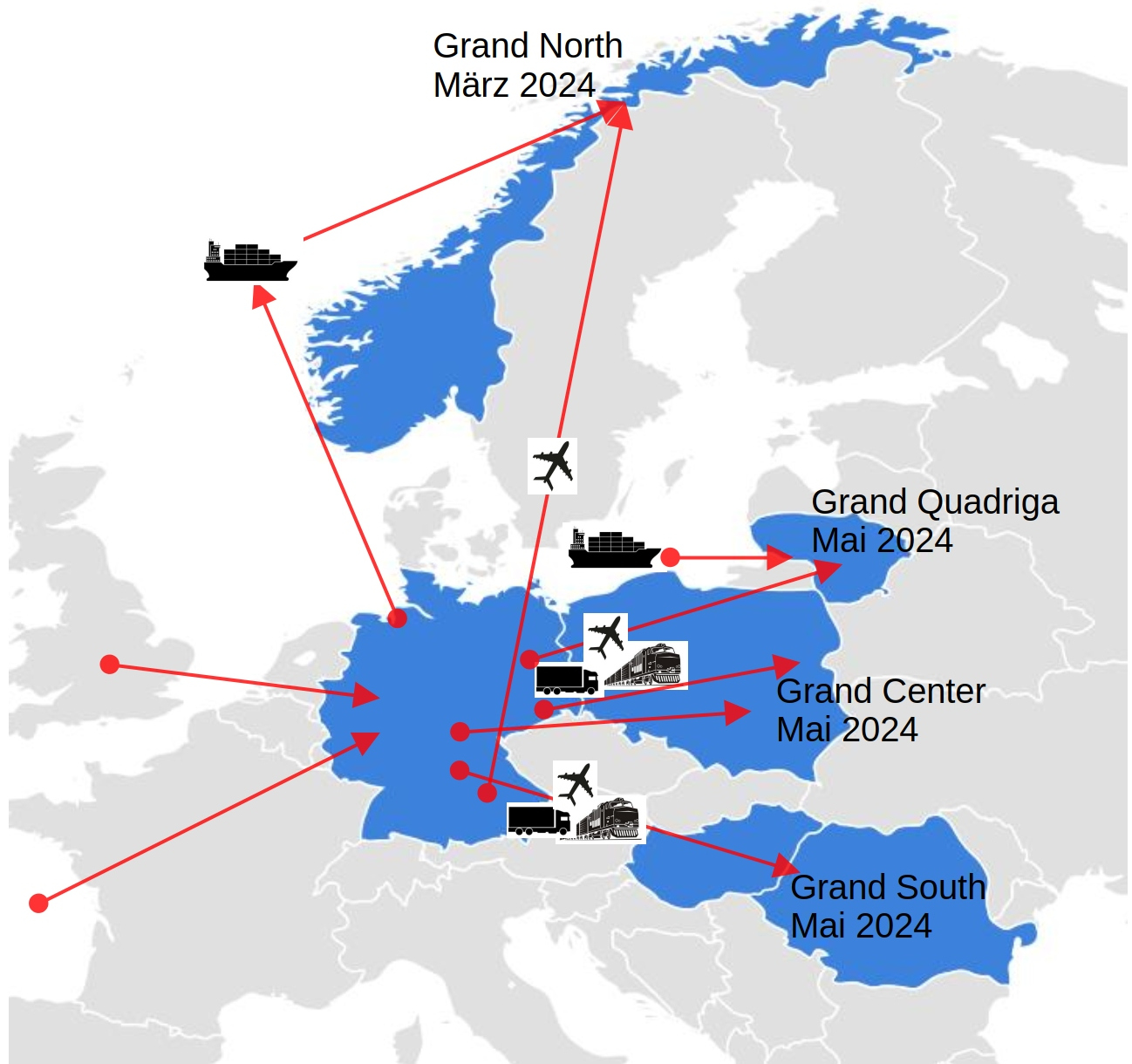
    Fact Sheet zu den NATO-Manövern 2024: Quadriga und Defender

    (Online-Fassung – siehe auch PDF als Web- und Druckfassung)

    Vorliegendes Fact Sheet soll anhand von Basis­daten Hilfestellung geben für Aktionen vor Ort gegen die innere und äußere Militarisierung. Deshalb sind zu den genannten Standorten auch die Geodaten hinterlegt, damit eigene Recher­chen möglich ist. Die Geodaten dienen zur Kartendarstellung in Openstreetbrowser (mit Kennzeichnung militärischer Sperrgebiete) und zur Identifizierung mit Satellitenbildern in Google Earth (inkl. historischen Aufnahmen zum Vergleich) oder einfacher auch in Google Maps.

    Eine Standortsammlung findet sich auf dieser Basis unter https://visualbases.org zumeist ergänzt mit Quellenverweisen wie Wikipedia.

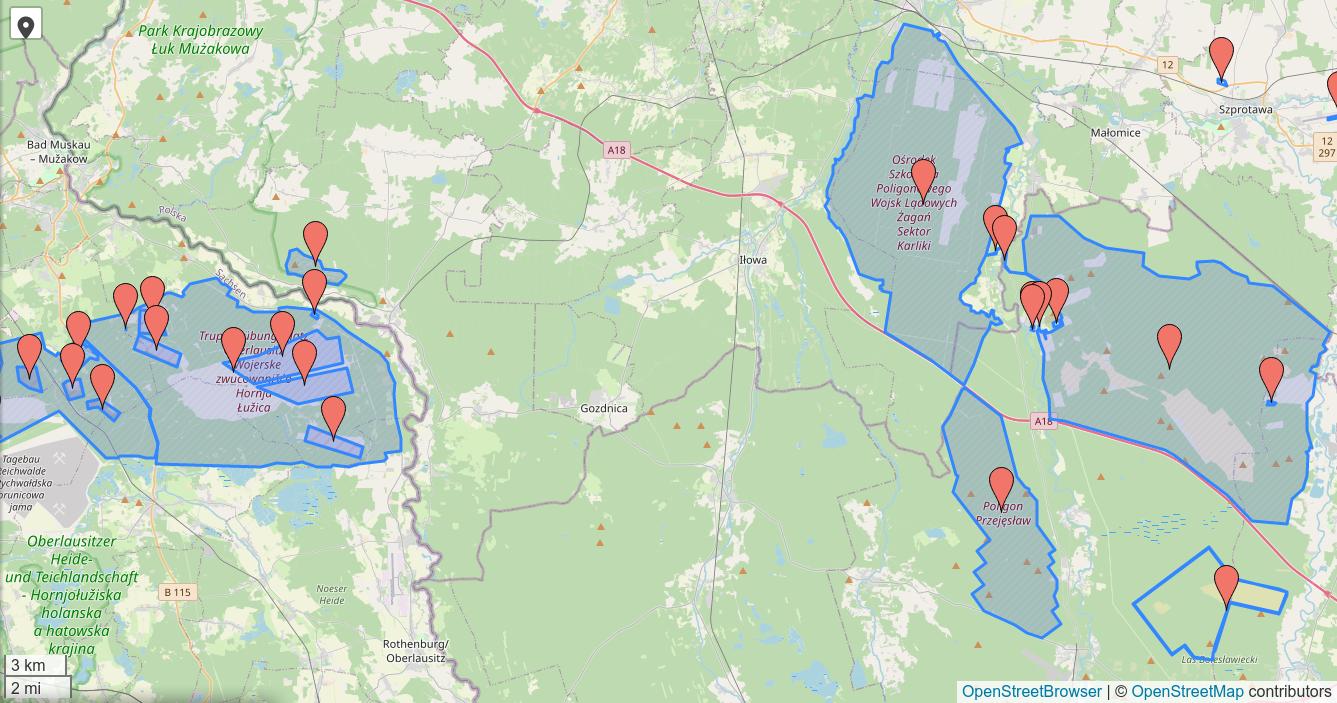
    anklicken für volle Größe
    anklicken für volle Größe

    NATO-Manöver – eine kleine Chronik

    Steadfast Defender (Defender-Europe 24): 40.000 Soldaten sollen aus den USA eingeflogen werden, weitere 20.000 Soldaten aus Großbritannien. Eingesetzt werden sollen ca. 50 Marineschiffe, 80 Transportflugzeuge und 1.100 Kampfjets.

    Air Defender 23 (Juni 2023): Größtes NATO-Luftmanöver aller Zeiten | Luftübungsräume in verschiedenen Regionen Deutschlands | beteiligt: 24 Nationen inkl. Nicht-NATO-Länder

    Defender-Europe 23: 9.000 US-Soldaten und 17.000 Soldaten aus 26 (NATO)-Partnerstaaten verteilt auf 10 europäische Länder.

    Defender Europe 22: 8.600 Soldaten, davon 3.400 aus den USA | Übungen verteilt auf 11 europäische Länder, Einrichtung von Logistikzentren in Osteuropa

    Defender-Europe 21 (März bis Juni 2021): vor allem in Estland, Bulgarien, Rumänien, Kosovo

    Defender 20 ursprünglich konzipiert als größte US-Truppenverlegung nach Europa seit 25 Jahren, Material- und Truppenbewegungen u.a. zu Übungsplätzen in Deutschland, Polen und Litauen.

    Große Truppenübungsplätze als Zielorte

    Deutschland: Grafenwöhr |49.70, 11.90

    Litauen: Rukla |55.01, 24.39

    Polen: Drasko |53.43, 15.76 – Zagan | 51.54, 15.35
    Rumänien: Cincu / Großschenk | 45.95, 24.83

    anklicken für volle Größe

    Kommandozentralen für NATO-Manöverlogistik in Deutschland

    Rostock: Hauptquartier Baltic Maritime Component Command |54.18, 12.12

    Berlin-Reinickendorf: Territoriale Führungskommando der Bundeswehr | 52.556, 13.32

    Wiesbaden-Erbenheim: Hauptquartier US Army Europe |50.04, 8.33

    Kaiserslautern: 405th Army Field Support Brigade |49.446, 7.812

    Ulm: Multinationales Kommando Operative Führung |48.417, 9.983

    Zivile Häfen und militärische Infrastruktur für Materialtransporte

    Bremerhaven: (US-)950th Transportation Company |53.584, 8.569

    Hamburg-Steinwerder: (Bw-)Werftliegerunterstützungszug Hamburg |53.536, 9.97

    Militärische Nutzung des Schienennetzes

    Deutschland ist rückständig im Bahn-Schienennetz, das nur zu weniger als zwei Drittel elektrifiziert ist. Zugleich gilt dieses aber als „kriegstüchtig“, weil mit den Tausenden von Dieselloks der Deutschen Bahn auch bei Lahmlegung des Stromnetzes noch militärische Transporte möglich sind. Besonders hoch der Anteil nicht-elektrifizierter Strecken in Sachsen.

    Bilder: Werbekampagne der Deutschen Reichsbahn 1942 und 1943. Quelle: Wikipedia

    Militärbasen als Convoy Support Center (CSC)

    An diesen Standorten als Zwischenstationen bei Truppenbewegungen erfolgt eine umfassende logistische Unterstützung durch Einheiten der Bundeswehr, zunehmend auch mit zivilen Vertragspartnern. Bundeswehr-Standorte, die bisher dafür genutzt wurden, sind z.B.:

    Niedersachsen: Garlstedt | 53.27, 8.67

    Sachen-Anhalt: Burg | 52.24, 11.87

    Brandenburg:
    Truppenübungsplatz Lehnin | 52.25, 12.74

    Sachsen: Oberlausitz | 51.45, 14.83 –
    Frankenberg | 50.91, 13.05

    Zunehmend werden aber auch zivile Standorte dafür integriert, z.B. in Alsfeld auf dem Gelände der Hessenhalle (März 2024).

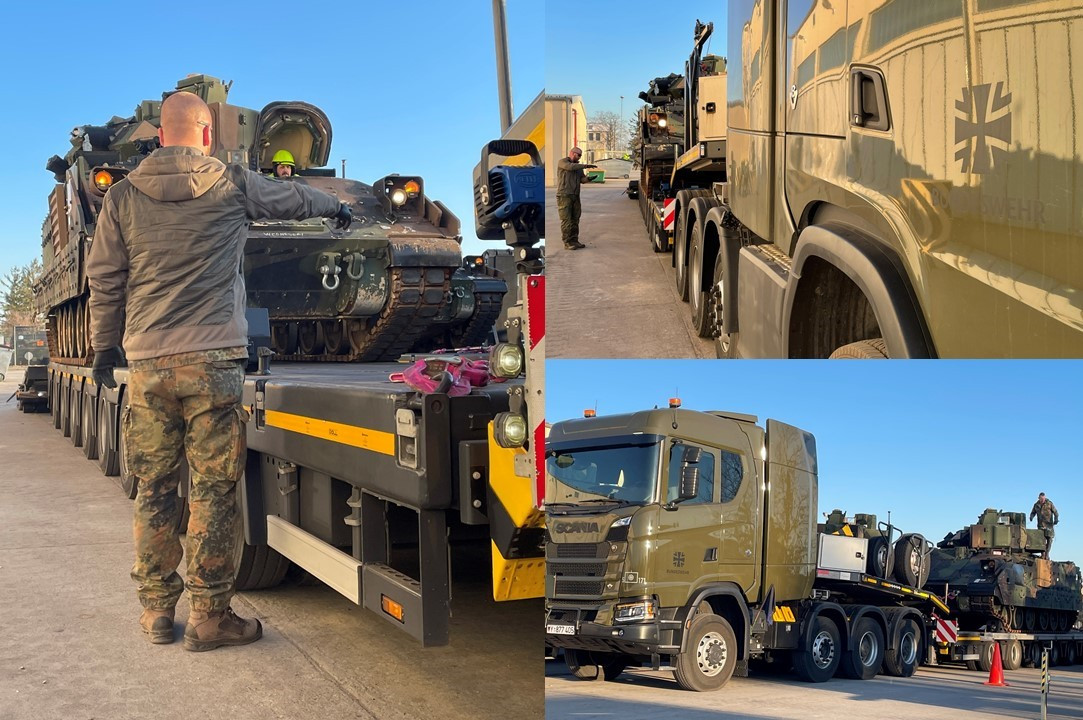
    Bradley-Kampfpanzer beim Verladen auf einen Schwertransport-Lkw der Bundeswehr auf der Coleman Worksite in Mannheim für den Einsatz in Grafenwöhr im Rahmen des „Host Nation Support“ der Bundeswehr. Foto: U.S. Army / Jason Todd, 15.3.2023

    Zivil-militärische Zusammenarbeit

    Bei NATO-Manövern erfolgt zunehmend eine Einbindung von zivilen Institutionen, wie Bundesamt für Bevölkerungsschutz und Katastrophenhilfe, Bundespolizei, Deutscher Feuerwehrverband, Technisches Hilfswerk (THW), Malteser, Johanniter Unfallhilfe, Deutsche Lebensrettungsgesellschaft (DLRG).

    Ausbau von Militärbasen in Osteuropa

    Nur beispielhaft seien hier genannt:

    Litauen: Gaižiūnų poligonas, Rukla |55.023, 24.3845

    Polen: Powidz |52.384, 17.855

    Rumänien: Mihail Kogălniceanu, Konstanza |44.36, 28.47

    Modellzeichnung des neuen Logistikzentrums der U.S. Army in Powidz. Im Hintergrund : Start- und Landebahn der 33rd Air Base Foto: U.S. Army

    Widerstand vor Ort

    An vielen Orten weltweit gibt es Widerstand gegen Militärpräsenz sowie den Ausbau von Militärbasen und Truppenübungsplätzen. Beispielhaft seien hier genannt:

    Deutschland: Stuttgart Kelley Barracks / Africom |48.725, 9.179 – Patch Barracks / EUCOM |48.736, 9.081
    Ramstein (Stopp Air Base Ramstein) |49.44, 7.60

    Montenegro: Sinjajevina |42.96, 19.33

    Japan: Henoko Camp Schwab (Peace for Okinawa Coalition) |26.52, 128.04

    Infos zu Manövern und geplanten regionalen Aktionen unter https://antidef20.de – https://friedensbuendnis-norddeutschland.de/aufruestung_im_norden.html - https://friedensratschlag.de 
    Fact Sheet erstellt von: Friedens- und Zukunftswerkstatt e.V.
  • Hintergründe zur aktuellen US-Militärpräsenz in Europa

    Der nachfolgende Text von Karl-Heinz Peil wurde entnommen aus einer Broschüre, die im September 2023 unter dem Titel “Konversion der Coleman Barracks in Mannheim” von dem Förderverein für Frieden, Abrüstung und internationale Zusammenarbeit e.V. in Mannheim herausgegeben wurde. 

    US-Militärpräsenz in Osteuropa

    Mit dem Ende des Kalten Krieges, dem Zwei-plus-Vier-Vertrag von 1990 und der Auflösung des Warschauer Paktes gab es seinerzeit auch Zusagen an Russland (bzw. die noch existierende Sowjetunion), dass es keine Osterweiterung der NATO geben werde, allerdings nicht in schriftlicher bzw. vertraglicher Form. Im Zuge der dennoch erfolgten schrittweisen Erweiterung der NATO wurde 1997 die NATO-Russland-Grundakte über Partnerschaft geschlossen, die als völkerrechtliche Absichtserklärung anzusehen ist. Wörtlich heißt es:

    „Die NATO wiederholt, dass das Bündnis in dem gegenwärtigen und vorhersehbaren Sicherheitsumfeld seine kollektive Verteidigung und andere Aufgaben eher dadurch wahrnimmt, dass es die erforderliche Interoperabilität, Integration und Fähigkeit zur Verstärkung gewährleistet, als dass es zusätzlich substantielle Kampftruppen dauerhaft stationiert.“

    Dies geschah zu einem Zeitpunkt, als noch kein osteuropäischer Staat Mitglied der NATO war, aber entsprechende Absichtserklärungen vorlagen.

    Seit Beginn der Ukraine-Krise im Jahr 2014 führt die NATO verstärkt Großmanöver in den neuen osteuropäischen Mitgliedsstaaten durch. Kampftruppen der USA und anderer NATO-Staaten werden seither zwar vermehrt in Osteuropa stationiert, allerdings zur formalen Einhaltung des Abkommens von 1997 nach dem Rotationsprinzip. Das bedeutet, dass nach einem halben Jahr ein Austausch stattfindet und sie somit formal nicht dauerhaft stationiert sind.

    Dazu erfolgt seit 2015 durch die U.S. Army ein ständiger Ausbau der logistischen Präsenz sowohl in Deutschland und den Benelux-Staaten wie auch in Osteuropa. Dieses erfolgte unter der Operation „Atlantic Resolve“, wobei zunächst eine Neustationierung mit ca. 500 Militärfahrzeugen, darunter ca. 100 Abrams Panzern erfolgte. Für deren ständige Rotation zwischen osteuropäischen und „alten“ NATO-Staaten wurden u.a. die Coleman Barracks als „European Activity Set“ eingerichtet. Als logistische Drehscheibe rückte dieser Standort vor allem bei den Vorbereitungen des Großmanövers „Defender 2020“ in den Fokus.

    Truppenübungsplätze der U.S. Army in Europa

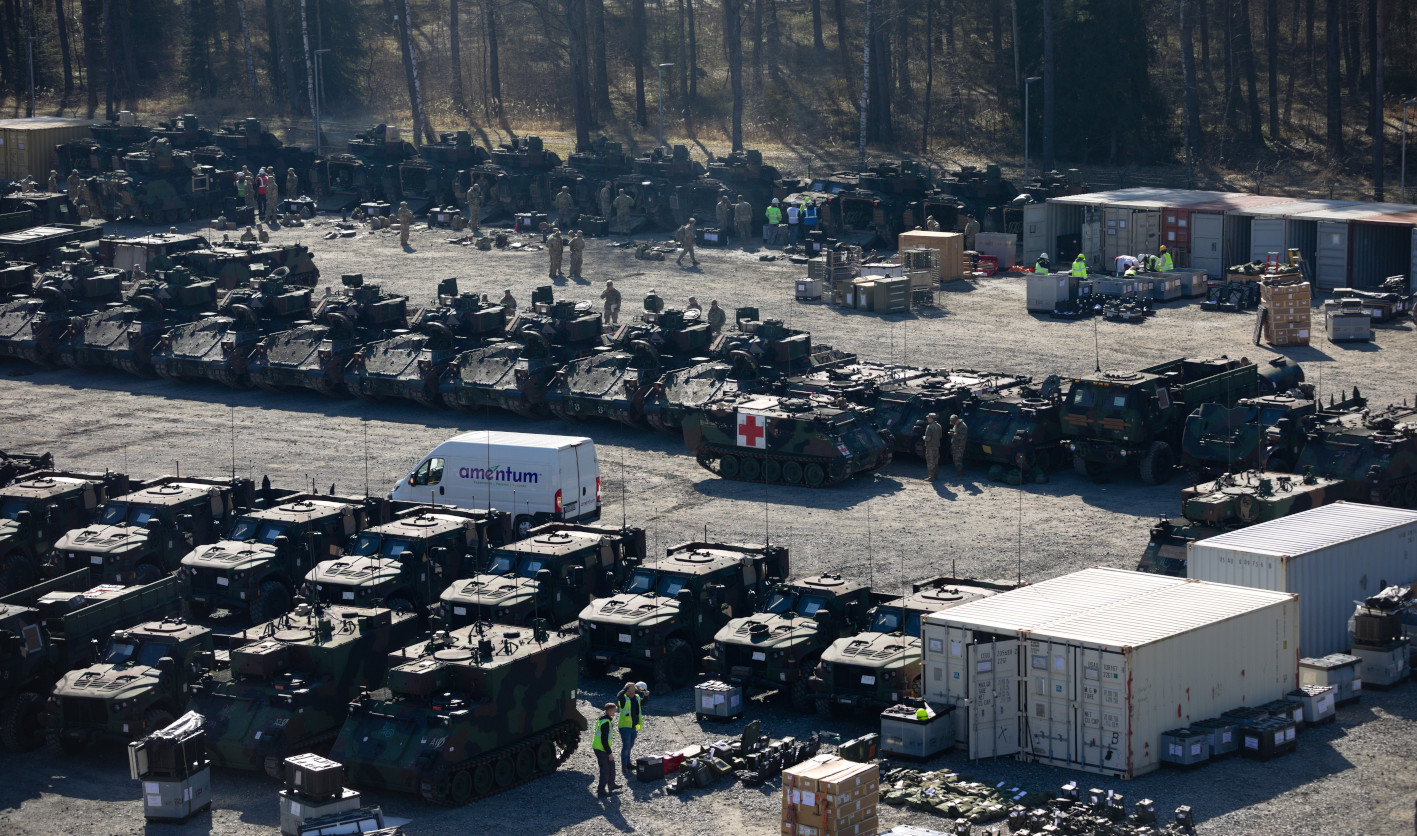
    Abb. 1: US-Soldaten bei der Inspektion militärischer Ausrüstung in Grafenwöhr nach der Anlieferung von der Coleman Worksite in Mannheim | Foto: U.S. Army / Destinee Rodriguez | 9.3.2022


    Abb. 2: Bradley-Kampfpanzer beim Verladen auf einen Schwertransport-Lkw der Bundeswehr auf der Coleman Worksite für den Einsatz in Grafenwöhr (im Rahmen des „Host Nation Support“ der Bundeswehr| Foto: U.S. Army / Jason Todd | 15.3.2023.
    Anmerkung: Die U.S. Army verfügt über eigene Schwerlast­transporter auf der Coleman Worksite in Mannheim.

    Wichtigster Übungsplatz der U.S. Army in Deutschland ist Grafenwöhr in der Oberpfalz. Zusammen mit den benachbarten Standorten Vilseck und Hohenfels ist er der größte Ausbildungsstandort der US-Armee außerhalb der Vereinigten Staaten. Inklusive der 2.000 bis 3.000 Mann starken Brigaden, die hier jeweils drei Monate üben, sind hier rund 14.000 Soldaten stationiert. (DFG-VK, 2022)

    In zunehmenden Maße finden auch Übungen der U.S. Army mit militärischem Großgerät in Osteuropa statt, vor allem in Polen, dem Baltikum sowie Rumänien und Bulgarien.

    Durch den Ukraine-Krieg haben die Truppenübungsplätze in Deutschland noch zusätzliche Bedeutung durch die hier erfolgende Ausbildung ukrainischer Soldaten. Neben Grafenwöhr sind dies vor allem Hohenfels (ebenfalls in der Oberpfalz) und Baumholder (in Rheinland-Pfalz).

    Manöver wie Defender Europe haben die Aufgabe, sowohl die Transport- und Lagerlogistik einzuüben als auch die Zusammenarbeit der verschiedenen nationalen Militärverbände zu erproben (Claudia Haydt, 2022)

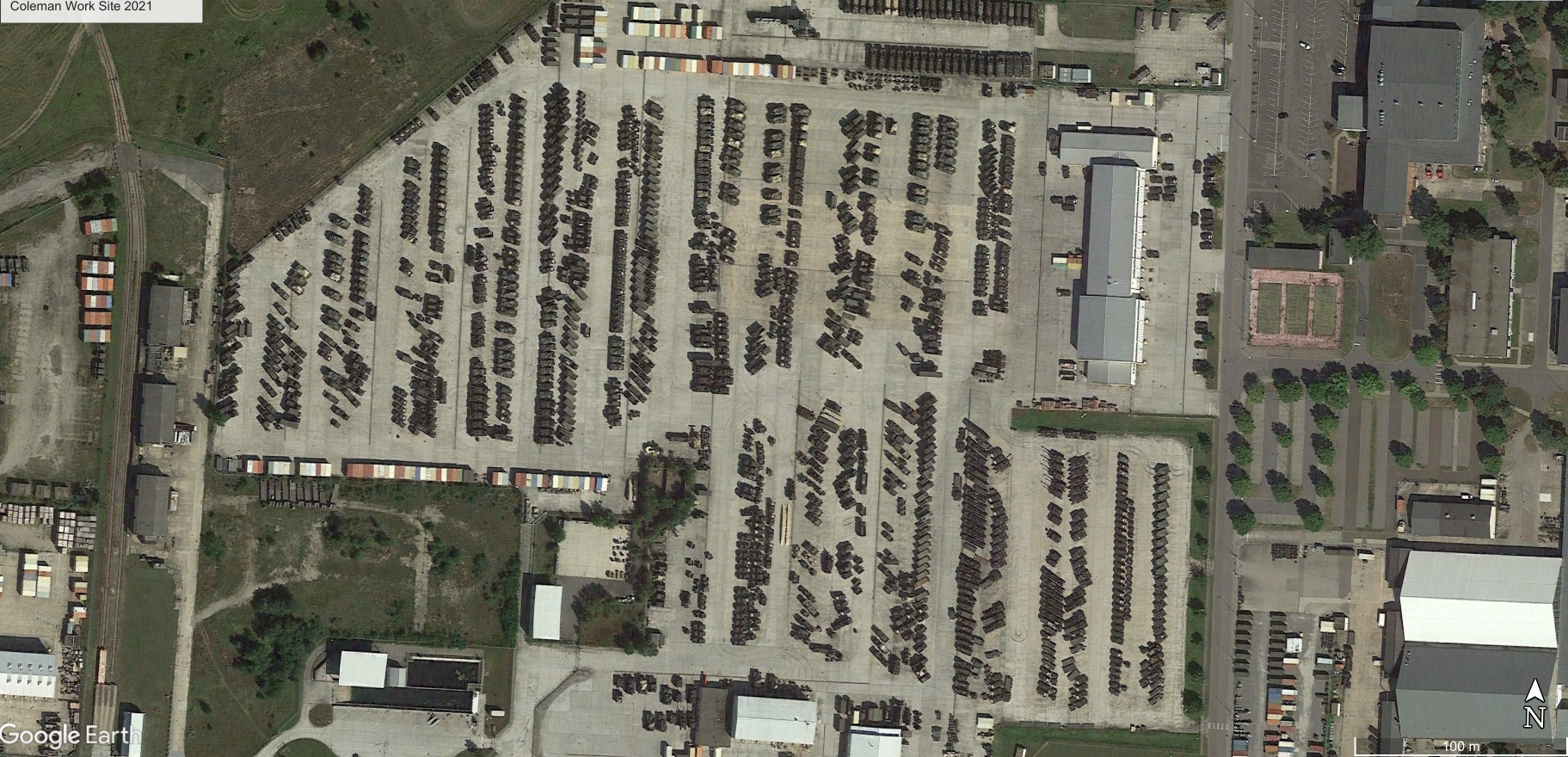
    Abb. 3: Militärfahrzeuge auf der Coleman Worksite, Quelle: Google Earth, Mai 2021


    Logistikzentren der U.S. Army in Europa

    Army Prepositioned Stock“ (APS) bezeichnet ein System der U.S. Army, das bis 2015 unter dem Namen „European Activity Set“ geführt wurde. Mit der neueren Bezeichnung wurde ein einheitliches System für die Logistik der U.S. Army eingeführt, das auf eine weltweit vorgesehene Einsatzfähigkeit ausgerichtet ist. Im Kern beinhaltet dieses, dass mit regionalen Logistikzentren eine schnelle Verlegung von Kampftruppen möglich ist, die ihre militärische Ausrüstung vor Ort vorfinden. Das heißt, dass vor allem militärisches Großgerät mit gepanzerten Fahrzeugen relativ nahe an möglichen Einsatzorten für Übungen und Kriegshandlungen vorhanden sind.

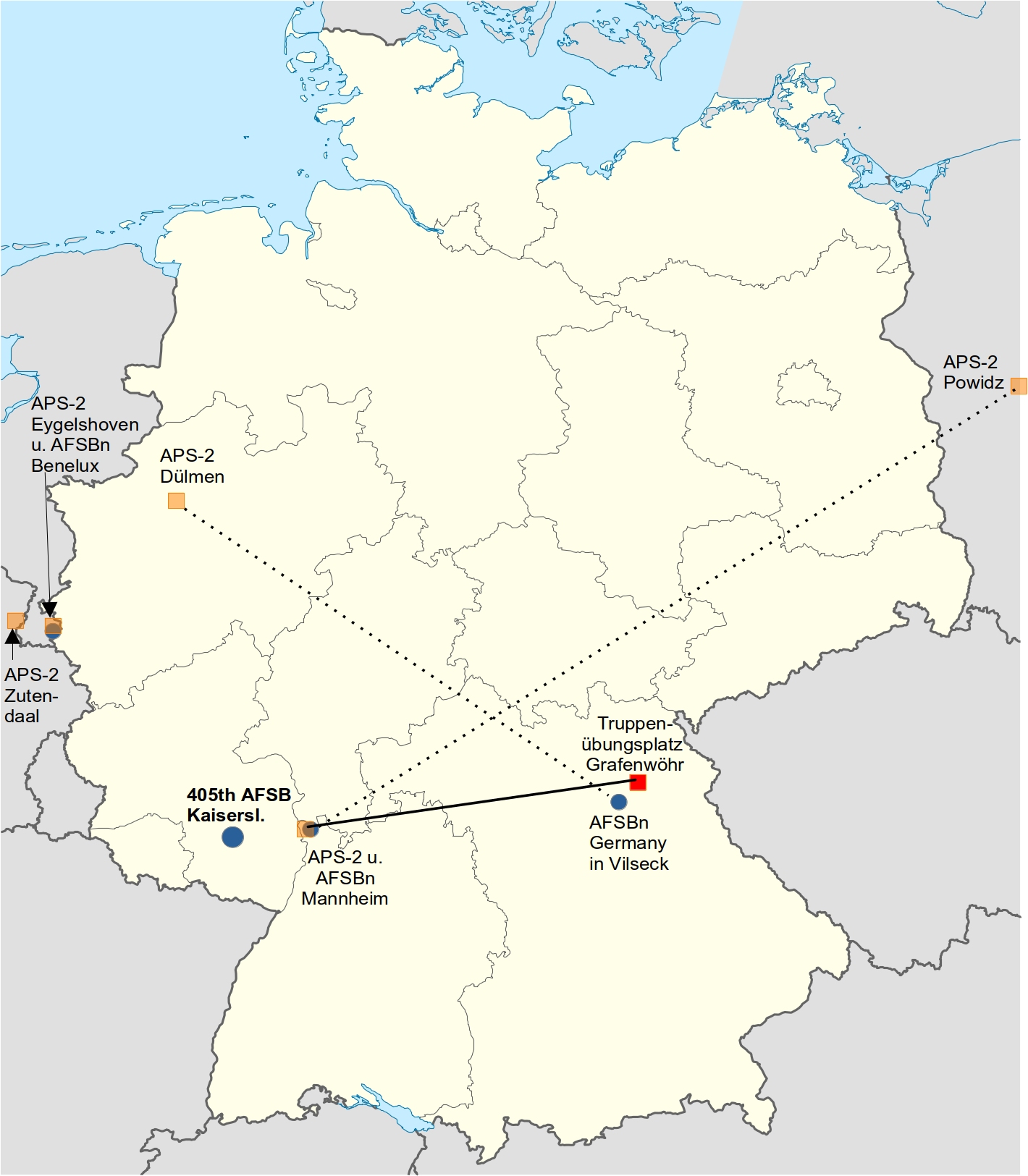
    Dazu wurden weltweit sieben Regionen definiert, wobei APS-2 für Europa steht und APS-7 für Afrika. Für Europa sind fünf Standorte definiert, von denen drei zur U.S. Army Garrison Benelux gehören:

    • Dülmen, Nordrhein-Westfalen

    • Eygelshoven, Holland

    • Zutendaal, Belgien

    Weitere Standorte sind die Coleman Barracks in Mannheim (U.S. Army Garrison Rheinland-Pfalz) sowie Powidz in Polen. Letzteres gehört indirekt zur U.S. Garrison Rheinland-Pfalz, da das verantwortliche Bataillon in Mannheim (siehe unten) angesiedelt ist.

    Ein weiterer europäischer Standort ist Livorno in Italien (Hafenstadt in der Nähe von Pisa). Livorno ist jedoch für Einsätze in Afrika konzipiert und gehört damit zu APS-7.

    Am Standort Powidz befindet sich ein Luftwaffenstützpunkt des polnischen Militärs (33rd Air Base). Beginnend mit 2019 wurde dieses als Logistikzentrum ausgebaut, das nach Abschluss der umfangreichen Baumaßnahmen im April 2023 offiziell eröffnet wurde. Der Gebäudekomplex beinhaltet u.a. fünf Lagerhäuser in einer Größe von je 200 x 60 m (Länge x Breite) und einem neu errichteten Bahnanschluss. In diesen wird das militärische Großgerät mit Klimaanlagen vorgehalten. Des Weiteren beinhaltet der Komplex eine große Werkstatt für Wartung und Reparatur sowie ein Munitionsdepot.

    Abb. 4: Modellzeichnung der neuen APS-2 in Powidz. Im Hintergrund ist die Start- und Landebahn der 33rd Air Base zu sehen. Foto: U.S. Army

    Zutendaal in Belgien wurde in den letzten Jahren erheblich ausgebaut, von 15 auf 23 klimatisierte Lagerhäuser (Größe je 60 x 60 m).

    Eygelshoven in Holland besteht u.a. aus acht klimatisierten Lagerhäusern (Größe je 90 x 55 m).

    Die Lagerbestände in Mannheim werden in einem Fact Sheet der U.S. Army aus dem Jahr 2020 im Unterschied zu den anderweitig genannten Standorten als „temporär“ bezeichnet. Nachvollziehbar ist dieses dadurch, dass die Lagerung der militärischen Großgeräte im Außenbereich und damit nicht in klimatisierten Hallen erfolgt.

    Für Europa sind diese Lagerbestände neben der Nutzung auf regionalen Truppenübungsplätzen wie in Grafenwöhr vor allem relevant für:

    • Serie der Großmanöver Defender Europe (jährlich seit 2020)

    • Lieferung von Kriegsmaterial an die Ukraine

    Abb. 5: APS-2 Standorte und damit verbundene militärische Strukturen der U.S. Army (Powidz liegt außerhalb des Kartenausschnittes zwischen Posen und Warschau). Grafik: Eigene Darstellung

    Logistikstruktur der U.S. Army in Europa

    Materiallieferungen aus den USA erfolgen seit 2015 an Standorte in das Baltikum (Estland, Lettland, Litauen), Polen, Rumänien und Bulgarien für Kriegsmanöver sowie seit 2022 für direkte Kriegseinsätze an die Ukraine.

    Als militärische Struktur für die APS-2 verantwortlich ist die 405th Army Field Support Brigade (AFSB). Diese wiederum besteht aus mehreren Bataillonen (AFSBn). Die Zuständigkeiten des in Mannheim ansässigen AFSBn wurden 2021 nach Dülmen übertragen. Seitdem ist das AFSBn in Mannheim für den APS-2 Standort Powidz zuständig.

    Übergeordnete operative Kommandoeinheit für das AFSB ist das 21st Theater Sustainment Command mit Sitz in Kaiserslautern. Gesamthaft unterstellt sind diese Strukturen dem Hauptquartier US Army Europe (and Africa), das 2012 von Heidelberg nach Wiesbaden-Erbenheim verlegt wurde.

    Konzipiert sind die beschriebenen APS so, dass damit die 405th AFSB vier Kampf-Brigaden versorgen kann.

    Angesiedelt bei der U.S. Army Garrison (USAG) Rheinland-Pfalz ist auch der „Army Support Activity Black Sea“, zuständig für zwei südosteuropäische Standorte:

    • in Rumänien die Air Base Mihail Kogalniceau, die von der U.S. Air Force stark genutzt wird

    • in Bulgarien der Truppenübungsplatz Novo Selo Training Area

    Die 405th AFSB ist auch verantwortlich für die regionalen Logistikzentren, u.a. für das Logistics Readiness Center Rheinland-Pfalz in Baumholder.

    Logistik-Drehscheibe Rheinland-Pfalz

    Abb. 6: Logistisch wichtige Einzelstandorte der U.S. Garrison Rheinland-Pfalz und der Truppenübungsplatz Baumholder. Grafik: Eigene Darstellung

    Anmerkungen zu den aufgeführten Standorten:

    Germersheim: Gefahrstofflager, das der zivilen U.S. Defense Logistic Agency (DLA) untersteht.

    Pirmasens: U.S. Army Medical Materiel Center-Europe

    Sembach: Hauptquartier der 30th Medical Brigade für medizinische Unterstützung für Einsätze in Europa und Afrika

    Miesau: Größtes Munitionsdepot des US-Militärs weltweit

    Ramstein: Wichtigstes Transport-Drehkreuz der U.S. Air Force weltweit
    – Nähe Ramstein: Landstuhl Regional Medical Center als größtes US-Hospital außerhalb der USA / Neubau in Weilerbach angrenzend an die Air Base

    – (Truppenübungsplatz) Baumholder: Logistics Readiness Center Rheinland-Pfalz

    Die gesamte USAG Rheinland-Pfalz unter Einschluss Mannheims beinhaltet die weltweit wichtigste logistische Drehscheibe des US-Militärs. Die Gesamtzahl der Soldaten und Zivilangestellten beträgt ca. 22.000 Personen. Einen wesentlichen Anteil hat dabei die U.S. Air Force in Ramstein. Hinzu kommen noch ca. 25.000 Familienangehörige und Dienstleister.

  • USA gets access to 17 Swedish military base

    New defence agreement between Sweden and the US signedThe US will have unrestricted access to 17 Swedish military bases. This is clear after the countries’ defence ministers signed a defence cooperation agreement at the Pentagon last night. (6.12.2023)
    Source: https://www.svt.se/nyheter/utrikes/nya-forsvarsavtalet-mellan-sverige-och-usa-signerat–nx1b1tThe Swedish military bases covered by the agreement are listed belowÄlvdalen: Military camp and military training area
    https://www.openstreetbrowser.org/#map=12/61.2281/14.1195&basemap=osm-mapnik&categories=military

    Berga: regimental area and military training area
    https://www.openstreetbrowser.org/#map=15/58.3554/15.6027&basemap=osm-mapnik&categories=military

    Boden: regimental area and military training area
    https://www.openstreetbrowser.org/#map=12/65.8275/21.6963&basemap=osm-mapnik&categories=military

    Halmstad: regimental area and flotilla area
    https://www.openstreetbrowser.org/#map=13/56.6909/12.8568&basemap=osm-mapnik&categories=military

    Härnösand: military training area and harbour
    https://www.openstreetbrowser.org/#map=12/62.6323/17.9379&basemap=osm-mapnik&categories=military

    Kiruna: Military camp and training area
    https://www.openstreetbrowser.org/#map=9/68.5664/20.7422&basemap=osm-mapnik&categories=military

    Kristinehamn: Regimental area and training area
    https://www.openstreetbrowser.org/#map=12/59.3747/14.7859&basemap=osm-mapnik&categories=military

    Kvarn: Military camp and military training area
    https://www.openstreetbrowser.org/#map=11/58.6319/15.4131&basemap=osm-mapnik&categories=military

    Luleå: Flotilla area

    Ravlunda: Military camp and training area
    https://www.openstreetbrowser.org/#map=11/65.7662/21.5202&basemap=osm-mapnik&categories=military

    Revingehed: Regimental area
    https://www.openstreetbrowser.org/#map=12/55.6818/13.4682&basemap=osm-mapnik&categories=military

    Ronneby: Flotilla area
    https://www.openstreetbrowser.org/#map=11/56.1941/15.2827&basemap=osm-mapnik&categories=military

    Såtenäs: Flotilla area
    https://www.openstreetbrowser.org/#map=11/58.4488/12.7029&basemap=osm-mapnik&categories=military

    Uppsala: Flotilla area
    https://www.openstreetbrowser.org/#map=11/59.8548/17.4868&basemap=osm-mapnik&categories=military

    Vidsel: Airport and test and evaluation area
    https://www.openstreetbrowser.org/#map=11/65.8565/20.1551&basemap=osm-mapnik&categories=military

    Visby: Regimental area and military training area
    https://www.openstreetbrowser.org/#map=13/57.6662/18.3477&basemap=osm-mapnik&categories=military

    Östersund: Military camps and training areas
    https://www.openstreetbrowser.org/#map=11/63.2083/14.6626&basemap=osm-mapnik&categories=military

  • NATO and US military personnel

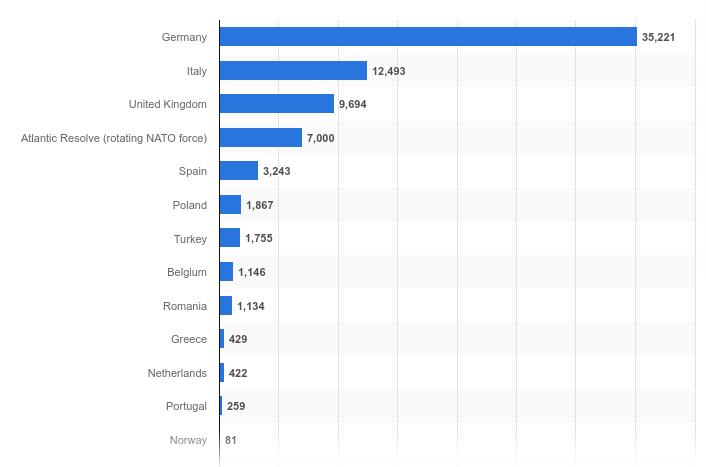
    Number of U.S. military personnel in Europe 2022, by country

    Published by Statista Research Department, Dec 5, 2023

    As of Feburary 2022, there were estimated to be approximately 35,221 active-duty United States military personnel in Germany, the highest of any European country. In response to the Russian military build-up prior to Russia invading Ukraine, the United States increased its military presense in countries such as Poland and Romania, where there are approximately 1,867 and 1,134 troops stationed respectively.

    Supplementary notes

    The source adds the following information: Germany, Poland and Romania troop levels have been adjusted to reflect recent changes. Many countries have smaller numbers, including military attachés and Marine guards attached to U.S. embassies and consulates.

    Data on countries with deployments of 20 personnel or fewer taken from the U.S. Department of Defense and corresponds to permanent deployments as of September 30, 2021.

    Comparison of the military capabilities of NATO and Russia as of 2023

    Personnel

    NATO

    Russia

    Total military personnel

    5,817,100

    1,330,900

    Active soldiers

    3,358,000

    830,900

    Reserve forces

    1,720,700

    250,000

    Paramilitary units

    738,400

    250,000

    Air Force

    Total aircraft

    20,633

    4,182

    Fighters / interceptors

    3,398

    773

    Ground attack aircraft

    1,108

    744

    Transport aircraft

    1,506

    444

    Special aircraft (e.g reconnaissance)

    970

    147

    Tanker aircraft

    615

    19

    Total helicopters

    8,614

    1,531

  • France’s loss is not China’s gain in the Indo-Pacific

    Chinese media have played up US-EU discord over AUKUS nuclear sub deal but the West vs China battle lines are still firmly in place
    German translation: Frankreichs Verlust ist kein Gewinn für China im indo-pazifischen Raum
    Source: https://www.nachdenkseiten.de/?p=76738
    Excerpts:
    […] France’s Exclusive Economic Zone in the Indian Ocean encompasses altogether 2,650,013 square kilometers, which is possible because of all the scattered islands which are under French control.

    Réunion with 860,000 inhabitants is a department d’outre mer, or an overseas department of France, and so is the smaller island of Mayotte northwest of Madagascar with a population of 270,000. Réunion and Mayotte are also included as overseas departments of France.

    In addition to those inhabited islands, France also controls the Kerguelen islands, the Crozet archipelago, the St Paul and Amsterdam islands, and a string of smaller islets around and near Madagascar: Juan de Nova, Europa, Bassas da India, Cloriosa and Tromelin.

    None of those islands have any permanent population but French scientists and researchers are based on some of them on a rotational basis.

    Most of those islands are small but the largest and most mountainous, Kerguelen, is half the size of Connecticut. More than 100 French scientists are based in Kerguelen during the summer and somewhat fewer in winter.

    Its main settlement, Port-aux-Français, has a satellite tracking station run by the French Space Agency, scientific laboratories, technical installations and, it is rumored, stockpiles of weapons.

    What is official is that France, apart from its troops on Réunion, maintains a military base in its former colony Djibouti on the Horn of Africa as well as a detachment of the Foreign Legion on Mayotte.

    France’s total troop strength in the southern Indian Ocean includes 1,900 plus aircraft and naval patrol boats, as well as 1,350 soldiers with air support in Djibouti. France also maintains a naval base in the United Arab Emirates with 700 troops, ships and aircraft. […]

  • CUB | The U.S. Military Base in Cuba: “GITMO” Guantánamo Bay

    Guantánamo Bay is one of the best ports in Cuba, and larger than the island of Manhattan. U.S. Army occupied it 1898 1902. The “Platt Amendment”  included that bay are for U.S. use.

    Since 1959, the country has repeatedly urged the U.S. to vacate the base because the lease was enforced by force, and such contracts do not endure under modern international law.

    U.S. – Cuba Treaty 1934

    ARTICLE I
    The Republic of Cuba hereby leases to the United States, for the time required for the purposes of coaling and naval stations, the following described areas of land and water situated in the Island of Cuba: (Guantánamo Bay)

    ARTICLE II
    necessary to fit the premises for use as coaling or naval stations only, and for no other purpose.

    Broken peace, broken laws, broken promises
    • Often shots were fired from this facility on Cuban territory, killing several people as a result.
    • Enemies of the revolution found support and refuge there.
    • During Trump‘s presidency the base was renovated and modernized.
    • Obama and Biden promised to close the prison „Camp Delta“.
    • For the U.S. closing the whole base is a taboo.


    Torture “Camp Delta”

    670 detainees since 2002 from 42 countries,
    40 detainees toda.

    interrogation and torture methods:
    “escalating pressure tactics, extended isolation, 20-hour interrogations, painful stress positions, screaming, hooding, and manipulation of diet, environment and sleep, exposing to loud music, strobe lights, cold temperatures, prolonged sleep deprivation, isolation, and painful restraints”.
    In his book of interviews with ex-prisoners, journalist and presenter Roger Willemsen (1955-2016) described the Guantánamo camp as “an institution outside international law, a camp of legal arbitrary-ness and the violation of humanitarian conventions.”
    Here the “concept of ‘being outlawed’ from the medieval age is brought to the present time.

    military and naval base wiretapping and espionage center
    torture camp occupied territory

    In 2018, the Pentagon commissioned a construction company to build a supplies warehouse for migrants on the site of the naval base, for which a budget of $ 23 million was available. According to the contract, the infrastructure should be designed for up to 13,000 migrants and 5,000 troops deployed for them and usable for at least 50 years.


  • Presence of NATO and France in Africa

    by Alain ROUY, Le Mouvement de la Paix (France)

    Until now, NATO has paid little attention to Africa, although the Western powers that are members of NATO have a strong presence on the African continent, in particular France, a former colonial power, and the United States, which since 2007 has established a unified US Army Command for Africa,  AFRICOM, located in Stuttgart, Germany. There are at least 34 US military sites in Africa: 14 main bases and 20 outpost camps, the main base being Camp Lemonnier in Djbouti with more than 5000 men.

    France has permanent and temporary bases in Africa, with 5,100 French troops currently engaged in operations in Mali and neighbouring countries, and another 3,000 troops stationed in Africa.

    NATO has only been involved in Africa as such since 2005, initially in the context of anti-terrorist operations, as Africa is perceived as a hotbed of terrorism, maritime piracy and drug trafficking and as a source of irregular migration that destabilises Western powers, particularly in Europe.

    To these threats to the security of member states, the document NATO 2030 – United for a New Era adds the systemic challenge posed by China and Russia, both in terms of security and economics. In this NATO 2030 report, Africa is referred to as part of the broader “South”, which includes the Mediterranean area and the entire African continent. Already, the NATO Warsaw Summit in 2016 stressed the need for a “strengthened approach” to the South due to the growing presence of Russia and China, and for enhanced political and practical cooperation with the African Union. The NATO 2030 report takes up these orientations with the following recommendations:

    • Enhance military response capability by strengthening NATO’s southern hub at Allied Joint Force Command Naples
    • Develop collaboration with the African Union; the report also suggests establishing regular consultations among Allies on Africa, a topic absent from the traditional agenda.


    NATO interventions in Africa and cooperation with the African Union since 2005
    • In 2005: NATO’s first intervention in operational support to the African Union in the field of strategic transport in the framework of the AU mission in Darfur (Sudan)
    • In 2007 in Somalia: provision of strategic lift in support of the African Union’s AMISOM mission
    • In 2007, NATO organised a major deployment and manoeuvre exercise in Cape Verde
    • In 2008, at the “request” of the UN, NATO contributed to the fight against maritime piracy in the Gulf of Aden and led Operation Ocean Shield.
    • Several agreements have been signed between NATO and the African Union, each time marking a deepening of cooperation:
    • in 2006, a cooperation agreement for the training of officers of the armies of African countries
    • considered as allies without being members of NATO (“NATO Training Cooperation
    • Initiative”)
    • in 2014, a NATO-AU cooperation agreement, followed in 2015 by the opening of a NATO liaison office at the African Union headquarters in Addis Ababa (Ethiopia)
    • in 2019, a new cooperation agreement to strengthen the political and practical partnership between NATO and the AU.


    NATO’s intervention in Libya in 2011

    This intervention was carried out without the consent of the African Union and on the basis of a contested interpretation of UN Security Council Resolution 1973 of 17 March 2011, allowing “to take all measures deemed necessary to protect the civilian population”. The military operations of massive bombing of Libyan military installations started on 19 March, led mainly by France, the United Kingdom and the United States. From 31 March they were conducted by NATO (Operation Unified Protector), under Canadian command, until the end of October 2011.

    The delivery of arms to the rebel areas was in violation of UN Resolution 1970 of 26 February 2011 establishing an arms embargo on Libya. NATO has gone far beyond the scope of Resolutions 1970 and 1973, which were designed to protect civilians. By overthrowing the regime of Gaddafi, who was killed on 20 October 2021, and by arming the rebels, NATO has only added war to war, provoked a chaos that continues in Libya to this day and destabilised the entire region with the proliferation of Islamist terrorist groups in Mali, Niger, Nigeria and Burkina Faso.

    Africa in NATO’s sights

    With the 2019 agreements signed with the African Union, NATO wanted to give itself a more positive image by emphasising the political cooperation programmes (also in NATO 2030) concerning women, peace and security. However, a different language is used in the report written in April 2019 for the NATO Parliamentary Assembly by Julio Miranda Calha of Portugal, entitled Security and Stability in Africa: Challenges and Priorities for NATO. The report calls for NATO countries to play a greater role in Africa and stresses the need to occupy the field, otherwise Russia and China will do so.

    The report reflects the geopolitical aims of NATO for Africa, as discussed at the current 2021 Summit. The globalised NATO is called upon to deal with Africa and to deploy its militaristic strategy there. The infrastructure exists for a reinforced NATO presence on the African continent thanks to the already strong presence of the US military. There are at least 6,000 US troops in Africa (including 800 in West Africa in support of the French army) and in 2021, for example, the US Army is organising military manoeuvres: the naval exercise Phoenix Express from 17 to 28 May in Tunisia with the participation of 11 countries, and the air-land exercise Authorize 2021 in May-June in Ouarzazate, Morocco, with the participation of French army helicopters. In the latter case, these manoeuvres appear to support Morocco against the Polisario Front and are a source of military tension with Algeria and diplomatic tension with Spain.

    In Africa as elsewhere, US and NATO activism is a threat to peace.

    The foreseeable redeployment of NATO to Africa makes it urgent to expand our anti-NATO network in Africa and for our peace organisations to link up with all peace forces active on African soil.

  • Global US military presence and the role of Germany

    by Karl-Heinz Peil
    published in German July 4th, 2021 on Telepolis
    https://www.heise.de/tp/features/Globale-US-Militaerpraesenz-und-die-Rolle-Deutschlands-6121113.html
    (A copy is available here: https://visualbases.org/2021-07-04_kp-telepolis/)

    Automatic translation by deepl.com, edited by the author. Concerning links and sources have a look to the original publication.

    US military bases worldwide: from the big bootprint to invisibility

    To depict the global US military presence, the roughly estimated number of 800 military bases in foreign countries and (own) overseas regions has been circulating for years. This is usually used to strikingly illustrate the character of the US empire, which is also referred to as “power projection”. However, this term can be misleading, since military bases are not only about provocatively perceptible, but also about (almost) invisible military presence. The total number mentioned is also questionable, but indispensable for comparison purposes.

    If we look at the number of foreign military bases of all the other states in the world, they only account for a little more than five per cent. The difference is even more serious if one subtracts the share of the NATO states Great Britain and France from this remainder. Of course, the main question is why Germany and Japan are the world leaders in terms of the official number of US military bases. While in the case of Japan this question answers itself in view of the US military escalation in the Far East, for Germany this can only be explained to a limited extent by the new NATO confrontation with Russia.

    More important is Germany’s logistical hub function for the global US military presence. This requires an understanding of the strategic concepts behind the global US military presence, which spans some 80 countries around the world. This handy combination of numbers – 800 military bases in 80 countries – comes from David Vine, professor of anthropology in Washington, who has presented these developments and backgrounds with three book publications in 2009, 2015 and 2020.

    In his first book, Island of Shame, he discusses the US military’s Strategic Island Concept. This is based in principle on a number of deals made by US governments with the former British Empire, dating back to 1940. At that time, US President Roosevelt made a deal that provided for the delivery of urgently needed warships – still from the time of the First World War – in the war against Germany in exchange for the surrender of islands of the British Empire.

    From the point of view of the time, this resulted in a classic win-win situation: Congress was left out of it, since it was still officially staying out of the war in Europe, while Great Britain, which was almost bankrupt due to the war, received weapons free of charge.

    This was the first strategic step of the USA towards a worldwide presence with military bases, which was continuously expanded after the Second World War. In his last book, “The United States of War”, David Vine deals once again with this deal and his own admission that he himself had long underestimated its epoch-making effect. After all, the Second World War led to thousands of (temporary) US bases, which is why this deal received little historical attention.

    In his first book, David Vine discusses in detail the takeover of Diego Garcia, a small island in the Indian Ocean, but strategically ideally located for the US military, via a lease agreement with the British, which was concluded in 1968 with a term of 50 years. The collateral damage caused by the necessary expulsion of about 2000 locals was consciously accepted.

    Through his contacts with the displaced people of Diego Garcia, David Vine also became a political activist, as he still campaigns for their rights today. This struggle also takes place through legal channels, via positive decisions on the right of return, most recently in 2019 by the International Court of Justice, which also reminded the UK to return the island to Mauritius, which is necessary under international law.

    The Pentagon’s 50 per cent accounting

    A second US author who focuses on US military bases abroad is Nick Turse, a journalist and political activist in New York. He specialises in research based on the release of documents under the Freedom of Information Act, giving him some insights into the grey areas of Pentagon accounting. An early 2019 post by him on the US website Counterpunch is titled “Bases, Bases, everywhere … Except in the Pentagon’s Report”.

    If the total number of US military bases could still be described as speculative only with reference to David Vine, Nick Turse is the one who has intensively checked this number and made it plausible. Both authors have independently examined the Pentagon’s official “Base Structure Report – BSR”. (Relevant excerpts from it can be accessed here and here). In his first book mentioned above, David Vine still mentions the number of about 1,000 US military bases worldwide with reference to the BSR for the financial year 2007.

    Above all, however, the current reduction to 800 must take into account that since 2001 the official number of “installations” or “sites” in Germany has fallen from 325 to 119. To simplify, it can therefore be said that Germany accounts for the largest share of the now significantly reduced total number of US military bases worldwide. However, the actual number is not verifiable. Thus, in addition to 87 “sites” listed by name, 32 “other sites” are also listed.

    A detailed examination shows some inconsistencies and a lack of logic, which can only be dealt with here by way of example. For example, the US hospital in Landstuhl is included with five individual “sites”. Also included in the BSR are sites of the national military with a strategic US presence. This is why, for example, the Bundeswehr airbase in Büchel with the US nuclear weapons stored there is listed, but not the Volkel military airbase in the Netherlands, for which the same applies.

    The fact that Volkel is not mentioned as a site of US nuclear weapons for nuclear sharing within NATO is not a state secret, but information that is freely accessible via Wikipedia articles. The military airbase Kleine Brogel in Belgium, where US nuclear weapons are also stored, is listed in the BSR.

    On the other hand, if you look at it from a different angle, you come across something strange: in the satellite images that can be viewed via Google Earth, the nuclear weapons depot there is one of the few military installations where the current satellite images (but not the historical images) are pixelated. On the other hand, a subtle censorship in the presentation of military installations on Google Earth is that, especially in Iraq and Afghanistan, only completely outdated satellite images can be seen.

    The non-official stationing locations of combat drones in Africa and the Middle East, on the other hand, can be easily viewed with current satellite images, and the comparison with historical images provides a good impression of US activities in recent years. In purely practical terms, however, this presupposes that one knows the geo-coordinates of these locations.

    The fact that these can be easily determined is thanks to a project that has been developed and updated for several years on the basis of a collaboration with Openstreetmap and Wikimedia. In the OpenStreetBrowser, “military layers” are visible as a map display from a certain zoom level if they are switched on as a display option.

    Military restricted areas and partially existing plain text designations are almost 100 per cent present there. Using the geo-coordinates, this can then be easily matched with satellite images in Google Earth. But back to the BSR: Until the end of 2017 (for the financial year 2018), the BSR appeared annually and has since disappeared into oblivion. An enquiry by the author to David Vine as to the reasons resulted in a terse answer: Donald Trump.

    The fact that he cut the official Pentagon accounting from 50 per cent to zero has probably less to do with political calculation than with his peculiarities in running the presidency as well as his real estate empire. If one takes a closer look at the BSR, it clearly has the character of a real estate report, with details of individual areas, owned and rented buildings, as well as the resulting size gradings.

    Such transparency was probably at odds with Trump’s business practices as a real estate mogul. However, true Pentagon transparency would not consist of an up-to-date and comprehensive real estate report, but of the complete naming and military classification of military sites. Officially, the Pentagon distinguishes between four categories, the most important of which is called “Main operating base (MOB)”.

    The subordinate military bases in regions with war operations are called “Forward operating base”. The somewhat synonymous terms “forward operating site” and “forward operating location” are used to designate those locations where troops are rotated or held in reserve for replenishment as required. However, the scope, source references and topicality of such designations are very thin, which is also evident, for example, from articles in the English- and German-language Wikipedia, where one is otherwise excellently informed about military bases with overviews and individual articles.

    The Africom in Stuttgart and Water Lilies in Africa

    Even more opaque is the fourth category with the official designation “Cooperative security location (CSL)”. As with the previous category, the term “base” is consistently avoided here. In his book “Base Nation”, David Vine, referring to his own conversations with US military personnel, describes their character as follows: “No flag, no forward presence, no families”. This means: no “power projection”, no “Little America” of civilian infrastructure and little or no visible US military.The latter is unproblematic insofar as more and more military tasks are being outsourced to civilian service providers anyway. Instead of the abbreviation CSL, there is another, semi-official and unofficial transcription: Lily pads (water lilies). These serve as a metaphor here because of their property that frogs can move unobtrusively on them, leaping from leaf to leaf without leaving a footprint. According to David Vine, the lily pad strategy is a further development of the “strategic islands” in that in both cases the aim is to prevent local resistance to the US military presence or to ensure that it does not reach critical mass due to the isolated location of the military bases. Lily Pads are usually hidden on the outskirts of civilian airports or at national military sites.

    This principle has particular relevance for Africa. In 2008, the US regional command Africom was established in Stuttgart. This determination was preceded by a search for locations in Africa itself. However, none of the countries with which corresponding negotiations were conducted was willing to accept it as a host country. However, to conclude from this that Stuttgart would therefore be an embarrassing solution leads to a fallacy.

    To do this, one must understand the criteria used by the US military to acquire new locations for military bases over the past 20 years. According to David Vine’s research, the Lily Pad strategy became official in 2009 at the latest, away from the main theatres of war, Afghanistan and Iraq, where a large number of larger military bases existed at times.

    In his 2015 book Base Nation, David Vine estimates that at least 50 such sites have been successfully acquired, mainly in Africa. Of course, one learns very little from official announcements about operational sites in Africa, which are controlled by Africom in Stuttgart.

    However, the Africom commander has been regularly reporting to the US Senate for several years about the military activities he directs. In the published (partial) 2020 report of General Townsend, who had taken over the post six months earlier, it says, for example, in bold print: “U.S. Africa Command’s operations are a bargain for America … a small prevention that amounts to only a few cents on every dollar of our defence spending.”

    Similar sentiments can be found in the corresponding report for 2021, but what is striking in the comparison of the two reports is that when it comes to naming strategic rivals, Russia has now become less relevant compared to China. Giving little space to this two countries is clearly Africom’s self-defined core strategic task.

    Officially (according to the BSR), US military bases in Africa are only present in Djibouti and Kenya. David Vine, on the other hand, assumes – mainly based on Nick Turse’s research – that there are at least 40 countries in Africa where a US military presence can be assumed. The meanwhile numerous stationing sites for combat drones are also not “bases” according to the definition of the US military, but only “forward operating sites” in the fight against terrorism.

    However, these sites are limited to relatively few countries such as Djibouti, Niger, Mali and Tunisia. The question therefore remains as to what interests most African countries have in the US military presence via Lily Pads, especially against the background that in the economic cooperation of these countries the USA is increasingly losing ground to China and Russia, which is indeed seen by Africom as the main problem. In this regard, David Vine refers to the “core competence” in which the USA is still the world leader.

    In order to improve the efficiency of the national military, the respective rulers in Africa are happy to bring US military personnel into the country as trainers, whose main occupation is to train their own personnel anyway. This can easily be done via Lily Pads and does not require a high-level military mission such as the EU mission in Mali (EUTM) with strong Bundeswehr participation.

    It should only be noted in passing that the current US withdrawal from Afghanistan does not in any way mean an end to the war, but only the end of the on-site presence with military bases, according to the corresponding announcement by US President Joe Biden on 15 April. In practical terms, this means a shift to covert operations from micro-locations and drone bases outside the country and an expanded Lily Pad strategy. (See also the article by Helmut Scheben in Infosperber of 17 June 2021: “Afghanistan: The high-tech war will continue”).

    Germany: from frontline state to logistical hub

    Between 2002 and 2004, a fundamental change took place in the deployment of US troops in Germany. This included not only a drastic reduction in stationing locations (practically as a “second wave” after the reductions up to the mid-1990s). Above all, there was a concentration of resources in Rhineland-Palatinate and there again in the greater Kaiserslautern area with the expansion of Ramstein Air Base. This was also accompanied by the relocation of the Rhein-Main Air Base, located at Frankfurt Airport, to Ramstein (transport aircraft) and Spangdahlem (fighter jets).

    In the archway of the former main entrance to the Rhein-Main Air Base was the text addition “Gateway to Europe”, symbolising the character of the air base in the decades of East-West conflict until 1989. New functions after the relocation to Ramstein Air Base were first revealed in 2012 by former US drone pilot Brandon Bryant and in 2013 by whistleblower Edward Snowden. Without the satellite relay station (as a technical gateway) at Ramstein, the global US drone war would be technically unfeasible, they agreed.

    In 2015, this led to the founding of the campaign “Stop Ramstein Air Base” with the focus on the activities of the US military using the technical infrastructure on German soil, which are contrary to international law and the Basic Law. Probably aware of this dependency on Ramstein and the unwanted attention from the German peace movement, the US military therefore began in 2017 to build a parallel facility of this kind at Sigonella Air Base in Sicily.

    The current satellite image shows that this facility with an identical set-up as in Ramstein is now probably available. This function would therefore not necessarily have to be located in Ramstein any more than, for example, the headquarters of the US missile defence system, which is installed in Poland and Romania. On the other hand, Ramstein is indispensable as a logistics centre for supplying forward military bases worldwide.

    For example, the German-language Wikipedia on the US Air Base near Agadez in Niger, which was established a few years ago, reads: “The military airfield, Base aérienne 201, was inaugurated in August 2019 with a flight of a C-130J from Ramstein. Since then, the US has been using drones here, among other things.”

    Not only combat drones, but also US fighter jets can only operate worldwide if they can be kept in the air for as long as possible. That is why a squadron of refuelling aircraft is stationed at Ramstein Air Base. When one speaks of Ramstein Air Base, a “Little America” because of the civilian infrastructure there, one must also include the entire military infrastructure in the region, with several US Army barracks in Kaiserslautern, what is probably the US military’s largest ammunition depot in Miesau, the US hospital in Landstuhl and the Baumholder military training area.

    The toxic materials depot in Germersheim on the Rhine, which is operated by the Defense Logistic Agency (DLA), is also an essential part of the logistics chain. A local citizens’ initiative is fighting against its major expansion because of the considerable environmental and health risks.

    Even actual disused areas and areas urgently needed for urban development, such as the Coleman Barracks in Mannheim, have been blocked by the US military for logistical purposes since 2015, in this case because of the war manoeuvres in Eastern Europe. Civilian facilities should not be overlooked either, such as Hahn Airport in Hunsrück, whose use by the US military is meticulously documented by a local citizens’ initiative on its homepage.

    Vine points out another important aspect in “Base Nation”: In contrast to other (main) stationing countries of the US military in Europe, such as Italy in particular, Germany has an optimal infrastructure with military training areas. Mention must also be made of the airspace in the greater Kaiserslautern region as Germany’s largest fighter jet training zone.

    Worldwide resistance is growing

    Around the world, there are many locations with military bases where there is well-documented resistance. The motives are very different. Mostly, environmental and health impacts play a role, such as aircraft noise from (very loud) old transport planes, fighter jet training zones and helicopters. Other significant burdens are extremely strong electromagnetic radiation from radar installations and the contamination of surface waters with pollutants such as, above all, PFAS extinguishing foams.

    The accumulated contaminants in the soil from PFAS, mineral oils and paraffin, on the other hand, will only have an effect decades later as time bombs in the groundwater and thus for the drinking water supply, unless costly remediation is undertaken. Protests become political when civilian facilities are used by the US military, such as Shannon Airport in politically neutral Ireland.

    Mass protests are most common in Okinawa. In August 2018, 70,000 people demonstrated against the environmentally destructive relocation of the US Air Base Futenma to the coastal strip of Henoko. Jon Mitchell, a British journalist who has lived in Okonawa for 10 years, has uncovered the full drama of military-induced environmental and health impacts, primarily through systematic use of the US Freedom of Information Act, and published it at the end of 2020 in his book Poisoning the Pacific – The US Military’s secret dumping of Plutonium, Chemical Weapons, and Agent Orange.

    But it is another question which triggers will lead to a resounding and successful resistance. In Okinawa, for example, protests have been raised mainly after violent crimes committed by US soldiers have gone unpunished due to the status of troops.

    From the US perspective, there are completely different approaches. Vine, as keynote speaker at a US peace movement convention in Baltimore in January 2018, pointed to the decline of public infrastructure in the US as exemplified by the dilapidated public transport system and the progressive failure of heating systems in schools in winter temperatures. He contrasted this with the excellent infrastructure of US military bases abroad, such as medical care at Guantánamo Bay, which US taxpayers could only dream of.

    This monetary view could also be applied in Germany to the Kaiserslautern military region. There, the largest US military hospital abroad is located in Landstuhl, which was built in the 1950s and has been continuously modernised since then. Although this is still modern by general standards, a new US hospital is currently being built directly opposite the air base (with further cuts already made in the nature reserve there), for which almost 1 billion US dollars have been budgeted, of which German taxpayers are paying about 15 per cent as planning costs.

    The reason given at the time (in 2010) was that war casualties would have to be brought quickly and directly to the operating table. The US hospital in Landstuhl is less than 10 km away as the crow flies, but can only be reached by public roads, although there is also a helicopter landing pad.

    The new US hospital in Weilerbach is only separated from the air base by a public road. To ensure that this does not stand in the way of a lightning-fast transition from the air base, a new gate is being built at the same time as the hospital, with a winding road layout, bridge construction and complex checkpoints.

    Unfortunately, a comprehensive picture of this frightening gigantomania cannot be obtained from satellite images – where, however, the US military’s consumption of space can be seen – but is best obtained directly on site. The Stop Ramstein Air Base campaign participated in the “International Day of Action against Military Bases” on 30 April with a bicycle marathon around the air base, where these kilometre-long checkpoints (with bypasses for war casualties), oversized with winding access roads and barriers, could not be overlooked.

    This is also a reason why several bicycle star rides to the air base are planned this time during the upcoming days of action in the week from 5 to 11 July, where one can get an idea of the dimensions of this military logistics hub.

    The author is the operator of the database and visualisation tool VisualBases, which was created on behalf of the Stop Ramstein Air Base campaign for the annual International Congress against Military Bases in Kaiserslautern.